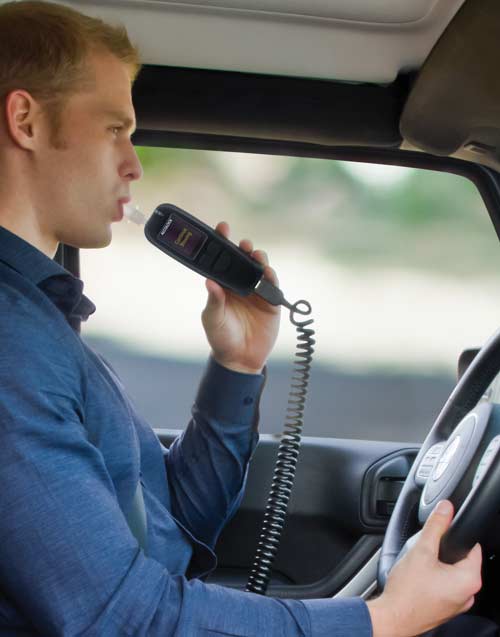


In late 2026, the Australian work health and safety landscape is more technologically integrated than ever, particularly across the resource and transport sectors. For commercial fleet operators running pre-shift alcohol testing, the conversation has moved from “do we test?” to “is the device that takes the reading defensible if we ever have to use it?”.
An alcohol interlock is only as legally defensible as its last calibration. The hardware is excellent. The fuel-cell sensor at the heart of every modern interlock measures Breath Alcohol Concentration (BrAC) to a precision that comfortably clears regulatory thresholds. But fuel cells drift. Over time, with repeated use, the sensor loses sensitivity. A device that has not been recalibrated on schedule produces readings that may pass internal review but will not survive a Fair Work challenge or an insurer’s post-incident inquiry.
This guide walks through what calibration actually does, how the state certification regimes treat it, what good record-keeping looks like, and what fleet managers should be asking their interlock supplier about right now.
Why fuel cells drift
A fuel-cell sensor produces a tiny electrical current proportional to the alcohol in a breath sample. The relationship is precise, but it is not stable forever. Three things shift the sensor’s response over time.
First, the cell itself ages. Each reading consumes a microscopic amount of the cell’s working surface. Across thousands of readings the response curve flattens.
Second, environmental exposure changes the cell’s behaviour. Heat (depot rooftops in a Pilbara summer), cold (overnight stabling in Bendigo winter), and humidity all push the response off its calibration baseline. Hardware certified for the Australian climate range copes with this better than imported devices that were certified for milder conditions, but no fuel cell escapes drift entirely.
Third, contamination matters. A driver who has just used mouthwash or eaten certain foods will produce a reading that the sensor cannot distinguish from real BrAC at the moment of the test. Quality interlock hardware uses retry logic to filter this out, but a contaminated sample residue can also bias the cell’s later readings if the device is not serviced.
The cumulative effect is “drift”, and drift always works in one of two directions. A drifted sensor either under-reads (a driver who is over the limit blows clean) or over-reads (a sober driver gets locked out and a productive shift is lost). Both are bad. Neither is detectable without periodic recalibration against a known reference standard.
State certification and calibration cadence
Every Australian state and territory that runs an alcohol interlock program prescribes hardware certification standards and calibration cadence for the personal program. Commercial operators look to those same standards when specifying interlocks for fleet pre-shift testing, because devices that have not been through state certification carry no audit weight if a workplace incident leads to a regulator review.
In NSW, Transport for NSW administers the approved-interlock list that names the device families meeting the state’s certification testing. Devices are calibrated at six-monthly service points by program-approved service centres. The same hardware family used for the personal program is what AIS-installed commercial interlocks run on. The cadence is the same. The certification is the same.
In Queensland, TMR’s interlock program uses the same six-monthly cadence, and a driver subject to an alcohol interlock condition on their licence is ineligible to hold a Driver Authorisation. The implication for fleet operators is direct: a commercial fleet that runs on interlocks of the same certified hardware family is producing the audit trail that Driver Authorisation already requires of its drivers.
In Western Australia, Transport WA’s Alcohol Interlock Scheme prescribes the certification standard. Commercial operators in WA reference the same standard, and the same calibration cadence (six-monthly for personal program participants, often quarterly for high-utilisation fleet vehicles).
The pattern is consistent across the certified states: interlock hardware approved for the personal-program path is the only hardware operators can defensibly point at for commercial pre-shift testing.
The calibration process
Calibration is not a software reset. It is a physical measurement against a known reference standard.
A trained calibration technician runs a known concentration of ethanol vapour through the device. The reference is produced either via “wet bath” (a temperature-controlled solution of ethanol in water releases a vapour with a known BrAC) or “dry gas” (a pressurised cylinder of ethanol/nitrogen blend at a precisely known concentration). The technician compares the device’s reading against the reference, applies the calibration adjustment, and re-tests until the device sits within the certified accuracy band.
The technician’s work is captured on a calibration certificate that names the technician, the reference standard used, the date, the device’s serial number, the pre-calibration reading, the post-calibration reading, and the next-due date. That certificate is what an auditor or an insurer reads if a workplace incident triggers a review.
For a fleet operator running fifty or a hundred or three hundred vehicles, the practical question is not “are these calibrated?” but “where do the calibration certificates live, and can I produce the current one for any vehicle in the fleet inside two minutes?”.
Calibration cadence for commercial fleets
State programs set a six-monthly minimum for personal program participants. Heavy-use commercial environments (a bus depot with fifty-plus drivers, a long-haul trucking operation, a mine-site transport contractor) typically benefit from a tighter cadence. Quarterly calibration is common for high-utilisation fleet vehicles. Some operators move to monthly cadence for safety-critical roles.
The right cadence is the one that matches the use intensity. A commercial interlock that takes thirty samples per shift drifts faster than a personal-program interlock that takes six. The same hardware, two different schedules.
What does not work is “we’ll calibrate when something goes wrong.” By definition, drift only becomes visible the moment a calibrated reference is brought to the device. A fleet running on lapsed-calibration interlocks may appear to have a clean record for years and then face a single incident review where the readings cannot be defended.
Record-keeping for audit defensibility
Five things sit on every well-run interlock fleet’s calibration register at any audit point.
A serial-numbered list of every device in the fleet, mapped to a vehicle and a depot. The current calibration certificate for every device, available digitally and reproducible inside two minutes. A schedule showing the next-due calibration date for every device. A log of any calibration that fell outside the standard accuracy band on first measurement, with the post-calibration result and the technician’s notes. And a written procedure describing what happens when a device fails its self-check or its next-due calibration is missed: who is told, how the vehicle is taken out of service, what the spare-device protocol is.
A fleet that can produce all five at audit consistently passes regulator and insurer reviews. A fleet that can produce hardware but no certificates, or certificates but no schedule, does not.
Implementation for fleet managers
Three operational things make the difference between a calibration program that works and one that creates more risk than it removes.
The first is hot-swappable spares. A fleet should hold two to five per cent of its device count as spare units, each held in a known-calibrated state. When a device fails its self-check, the supervisor swaps it for a spare and the failed unit goes to service. No shift is delayed; no driver is sitting in a vehicle waiting for a different test method.
The second is hygiene. Single-use disposable mouthpieces are not optional. The cost of a mouthpiece is trivial against the reputational cost of an outbreak traced to a shared mouthpiece. Every commercial-grade interlock uses certified mouthpieces sized for the device.
The third is supervisor training. The driver who registers a positive result on a pre-shift test is in the worst moment of their day. The supervisor who handles that moment well, with a documented procedure and without humiliation, keeps a workforce intact. The supervisor who handles it badly creates a personnel issue on top of a safety issue. Worth investing in the training before it is needed.
Asking the right questions of an interlock supplier
A fleet operator specifying a commercial interlock program should be asking five questions of any prospective supplier.
Is the hardware family currently certified by the state programs in the jurisdictions the fleet operates in? Is the calibration network owned by the supplier, or sub-contracted (and if sub-contracted, what is the SLA on turnaround)? Is the calibration certificate digital, or paper-only? Is there an asset register the operator can pull at any audit moment? And what is the spare-device protocol when a fielded unit fails its self-check?
Suppliers who can answer all five clearly are the suppliers worth specifying. Suppliers who deflect on any of them are the suppliers whose hardware will be the focus of the next workplace incident review.
Where AIS sits
Affordable Interlock Systems is the exclusive Australian agent for ALCOLOCK, the manufacturer that supplies the hardware family certified across the Australian state interlock programs. AIS holds current certifications across NSW, QLD, ACT and WA, with WA service centres going live, the Northern Territory contract pending, and Victoria and South Australia in flight.
For commercial fleet operators specifying or upgrading their alcohol interlock program, the commercial alcohol interlock systems page lays out the AIS commercial offering, including pre-shift testing protocols, calibration cadence options, and integration with fleet management systems. The installer network across NSW, QLD and beyond handles fitment, calibration, and the spare-device logistics that keep depot operations running.