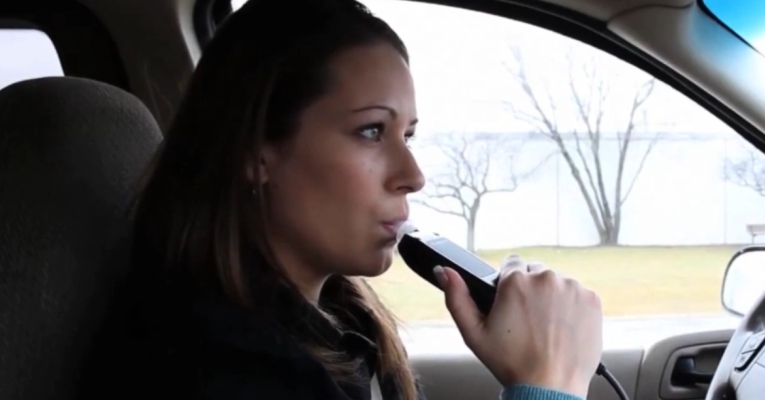


Alcohol Breath Testing Systems: When Did Drink Driving Become a Recognised Problem in Australia?
You see the flashing lights of a random breath test and know the routine. But have you ever wondered why that simple roadside check exists?
It is hard to picture now, but Australia once had a culture where drink driving was tragically common, leading to a national crisis that claimed thousands of lives every year.
So, what was the turning point? This guide traces the journey from those dangerous early days to the introduction of the first breathalysers, showing how public will and new technology combined to transform our roads forever.
The Early Days: When Drink Driving Wasn’t Seen as a Crime
It is difficult to imagine today, but for much of the 20th century, drink driving wasn’t seen as the serious crime it is now. Before the 1960s, the culture was different and having a few beers before driving home was a common part of life.
An Unprovable Offence
The only legal charge was “Driving Under the Influence” (DUI), an offence that was notoriously difficult for police to prove. An officer had to rely on subjective observations, like slurred speech or asking a driver to walk a straight line.
But how do you prove that in court? The system was failing because it could only ever catch the visibly intoxicated, leaving thousands of dangerously impaired drivers unchecked.
The Turning Point: Recognising Drink Driving as a National Problem
By the 1960s, the tragic results of this culture were impossible to ignore. Australia’s road toll climbed relentlessly, peaking at a staggering 3,798 deaths in 1970 alone.
Research from the era revealed the shocking truth—alcohol was a factor in over half of these fatal crashes.
A Doctor's Fight for Change
The loudest calls for change came not from politicians, but from the medical front lines. Victorian police surgeon Dr John Birrell meticulously documented the link between crash victims and alcohol.
He used his grim, first-hand data to prove to the government that this was a public health emergency, giving them the scientific and moral backing they needed to finally act.
The Introduction of Alcohol Breath Testing Systems
But how could police enforce a new standard without a reliable tool? The answer came through a crucial evolution in technology.
The First Roadside Tests
The first portable breath testers weren't electronic at all. They were disposable glass tubes, known as the Dräger Alcotest, filled with yellow potassium dichromate crystals. A driver would blow into a bag, the air would pass through the tube, and if alcohol was present, the crystals would turn green.
It was a simple pass/fail system, but it wasn't precise enough for a conviction on its own.
A Technological Revolution
The real game-changer arrived in the 1970s with the miniaturisation of the electronic fuel cell sensor. Suddenly, testing shifted from a slow one-use chemical reaction to a rapid, reusable, and highly accurate electronic measurement. This was the breakthrough that made widespread enforcement possible.
This new technology gave Victoria the confidence to introduce the first Random Breath Testing (RBT) in 1976. NSW followed with its own powerful program in 1982, backed by the iconic campaign— “If you drink, then drive, you’re a bloody idiot.”
The Legal and Cultural Shift
The new breathalyser technology gave police a powerful tool, but it needed a clear line to enforce. The most important legal reform was the decision to lower the Blood Alcohol Concentration (BAC) limit to 0.05.
The Science Behind the Limit
So, why that specific number? The choice was heavily influenced by a famous piece of research called the "Grand Rapids Study."
It was the first to scientifically prove that while any alcohol affects driving, the risk of a crash begins to climb exponentially right around the 0.05 BAC mark. This scientific evidence gave governments the justification they needed.
It also led to the creation of a strict zero BAC limit for all learner, provisional, and professional drivers of heavy vehicles and public transport.
From Breath Testing to Alcohol Interlocks
The success of Random Breath Testing laid the foundation for the next logical evolution in road safety. While RBT was revolutionary, it was a reactive tool. So, what was the next step?
The answer was to shift from catching offenders to preventing the offence from ever happening.
From Deterrence to Prevention
Think of it this way—RBT is a system of "general deterrence." It works by creating a credible threat of being caught, influencing the entire driving population to make better choices.
An alcohol ignition interlock, however, is a system of "specific prevention." It's not a threat. It is a physical barrier applied to a specific high-risk individual (a convicted offender) to make it physically impossible for them to re-offend.
This proactive approach is the modern legacy of Australia's long fight for safer roads. Affordable Interlocks plays a key part in this story, making this proven technology accessible to help drivers meet their legal obligations.
A Safer Future on Australian Roads
The results of these reforms were dramatic. The introduction of RBT led to a one-third reduction in alcohol-related fatalities in its first few years, saving thousands of lives.
The safer roads we have today were not an accident. They are the direct result of decades of community pressure, brave policy, and crucial technological innovation.
That legacy continues to evolve. Modern systems like alcohol interlocks represent Australia's ongoing commitment to using smart technology to protect drivers, passengers, and the entire community. To learn more about where Affordable Interlock Systems services please click here.