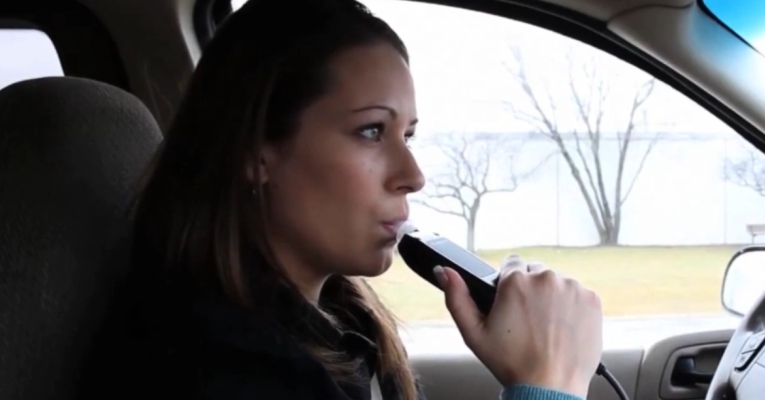


New South Wales has taken one of the most decisive steps in Australia toward eliminating drink driving by embedding alcohol interlock systems into its road safety framework. Since a major legislative shift in 2015, alcohol interlock systems have become a mandatory condition for serious drink driving offences, reflecting a broader commitment to the state’s “Towards Zero” road safety strategy. Rather than relying solely on licence disqualification, NSW has embraced a proven behavioural approach: physically separating drinking from driving. Alcohol interlock systems are designed to prevent a vehicle from starting if alcohol is detected on a driver’s breath, creating a real-time barrier against repeat offending. This shift recognises that sustained behaviour change, not punishment alone, is key to improving road safety outcomes. As a result, alcohol interlock systems now form a cornerstone of drink driving compliance in NSW, particularly for high-risk offenders.
The MAIP Pathway: How It Works in NSW
The Mandatory Alcohol Interlock Program (MAIP) sets out a structured pathway that allows eligible offenders to return to driving under strict supervision. Understanding how the process works is essential for anyone affected by a serious drink driving offence.
Step 1: The Court Order
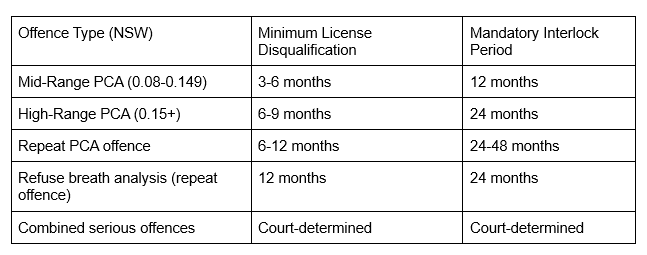
Participation in MAIP is court-ordered and mandatory for:
- All first-time High-Range PCA offenders (0.15 BAC or above)
- Repeat drink driving offenders
- Certain combined offences involving alcohol and other serious driving breaches
In NSW, magistrates no longer have discretion to substitute an interlock requirement with a shorter disqualification period for these categories. Once disqualified, eligible offenders must complete an interlock period before they can regain full driving privileges.
Transport for NSW and analysed BOCSAR data show that more than 10,209 interlock orders have been issued through MAIP since its inception, reflecting the scale of uptake across serious drink driving cases. This marks a significant departure from older enforcement models, positioning alcohol interlocks as a public safety requirement rather than an optional rehabilitation tool.
Step 2: The Medical Consultation
A unique feature of alcohol interlock systems NSW-wide is the mandatory medical assessment prior to program entry. Offenders must attend a consultation with an approved medical practitioner and obtain a “drink-less” medical certificate.
This step ensures that underlying alcohol dependency issues are identified early and managed appropriately. It also reinforces the program’s emphasis on behaviour change, not just compliance. Without this certificate, entry into the interlock program is not permitted.
Step 3: Installation & Training
Once approved, the driver must have an interlock device installed by a Transport for NSW–approved provider (Affordable Interlock Systems is one of these and works with its partners to install the products) . Modern alcohol interlocks include:
- Breath-testing technology calibrated to detect even trace amounts of alcohol
- Integrated cameras that verify the identity of the person providing the breath sample
- Secure data logging for compliance monitoring
Drivers receive mandatory training on device use, including correct breath testing procedures and the consequences of failed tests or missed services.
The Penalty of Non-Compliance: The 5-Year Rule
One of the most misunderstood aspects of the NSW framework is the severe penalty for failing to participate in MAIP.
If an offender does not install an alcohol interlock device and is not granted a rare court exemption, they are subject to an automatic five-year licence disqualification. This “5-year sit-out” rule applies regardless of the original offence severity once an interlock order is made.
As a result, participation in the alcohol interlock program is a privilege that restores mobility far sooner than non-compliance. For many drivers, it is the only practical pathway back to legal driving, employment and family responsibilities.
Evidence of Success: The BOCSAR Impact
The effectiveness of alcohol interlock systems in Australia is strongly supported by empirical data. According to a 2022 evaluation by the NSW Bureau of Crime Statistics and Research (BOCSAR), there was an 86% reduction in drink driving reoffending while the interlock device was installed. BOCSAR’s findings also reveal a 43% reduction in reoffending within 36 months after completing the program.
These figures demonstrate that alcohol interlock systems are not merely restrictive devices but powerful behavioural interventions. By enforcing sober driving over an extended period, the program helps normalise alcohol-free driving habits that persist beyond device removal.
For policymakers and enforcement agencies, this data confirms that interlocks outperform traditional licence disqualification in reducing recidivism.
Technical Compliance for NSW Users
Compliance with alcohol interlock systems NSW requirements is strict and highly monitored. Drivers must meet several non-negotiable standards throughout the program, including a Zero BAC requirement, rolling re-tests, camera monitoring, service schedule and calibration.
Zero BAC Requirement
NSW operates on a strict 0.0 BAC limit for all interlock participants. Any detected alcohol–no matter how small–results in a failed test and is recorded as a violation.
This zero-tolerance approach reinforces the principle that drinking and driving must be completely separated.
Rolling Re-Tests and Camera Monitoring
Alcohol interlocks require random rolling re-tests while the vehicle is in operation. This prevents drivers from consuming alcohol after starting the car.
The integrated camera ensures that the registered driver is the person providing the breath sample. Any attempt to bypass or tamper with the system is also detected, and violations may extend the interlock period or trigger further penalties.
Service Schedule and Calibration
Devices must be serviced and calibrated at regular intervals, typically monthly to bi-monthly, depending on usage and provider requirements. Missed services are logged as non-compliance and can result in licence sanctions.
These technical safeguards ensure that alcohol interlock systems in Australia, and particularly in NSW, maintain high integrity and enforcement credibility.
A Safer New South Wales
Alcohol interlock systems represent a decisive shift in how NSW addresses serious drink driving. Rather than relying solely on extended disqualification, the state has adopted technology-driven enforcement that actively prevents reoffending while promoting long-term behavioural change.
Through the MAIP, drivers are given a structured, monitored pathway back to the road, one that prioritises public safety while supporting rehabilitation. Notably, BOCSAR reports that high-range PCA offenders were the most likely to begin the interlock program (70.6%) and had completion rates of 92.2%, underscoring the program’s effectiveness. Therefore, alcohol interlock systems are proving to be one of the most effective road safety interventions in the state’s history.
For affected drivers, compliance is not just a legal obligation. It is the fastest and most responsible way to regain a full licence. To begin the process, individuals should contact an approved alcohol interlock service provider, and take the first step toward safer driving and lasting compliance. Please reach out for more information regarding our services and we will connect you with one of our NSW installation partners.
A Safer New South Wales
Alcohol interlock systems represent a decisive shift in how NSW addresses serious drink driving. Rather than relying solely on extended disqualification, the state has adopted technology-driven enforcement that actively prevents reoffending while promoting long-term behavioural change.
Through the MAIP, drivers are given a structured, monitored pathway back to the road, one that prioritises public safety while supporting rehabilitation. Notably, BOCSAR reports that high-range PCA offenders were the most likely to begin the interlock program (70.6%) and had completion rates of 92.2%, underscoring the program’s effectiveness. Therefore, alcohol interlock systems are proving to be one of the most effective road safety interventions in the state’s history.
For affected drivers, compliance is not just a legal obligation. It is the fastest and most responsible way to regain a full licence. To begin the process, individuals should contact an approved alcohol interlock service provider, and take the first step toward safer driving and lasting compliance. Please reach out for more information regarding our services and we will connect you with one of our NSW installation partners.